Technology
An ingenious take at heat engines
The device operates on continuous internal circulation of hydrogen (H₂) as a working fluid using electrochemical membrane electrode assemblies (MEA) for hydrogen compression and expansion at an efficiency that approximates Carnot.
The Voltage produced is determined by the Nernst Equation
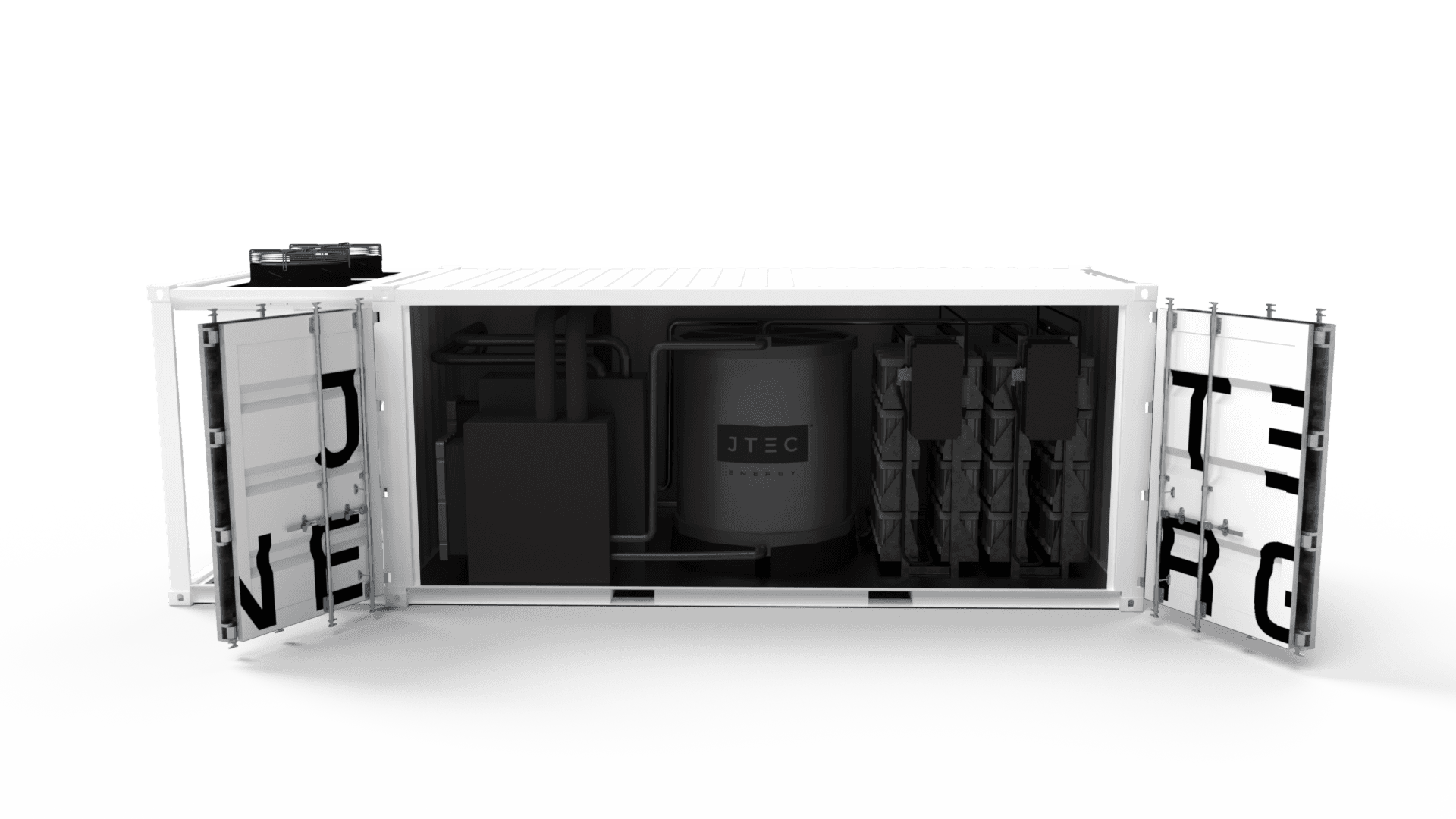
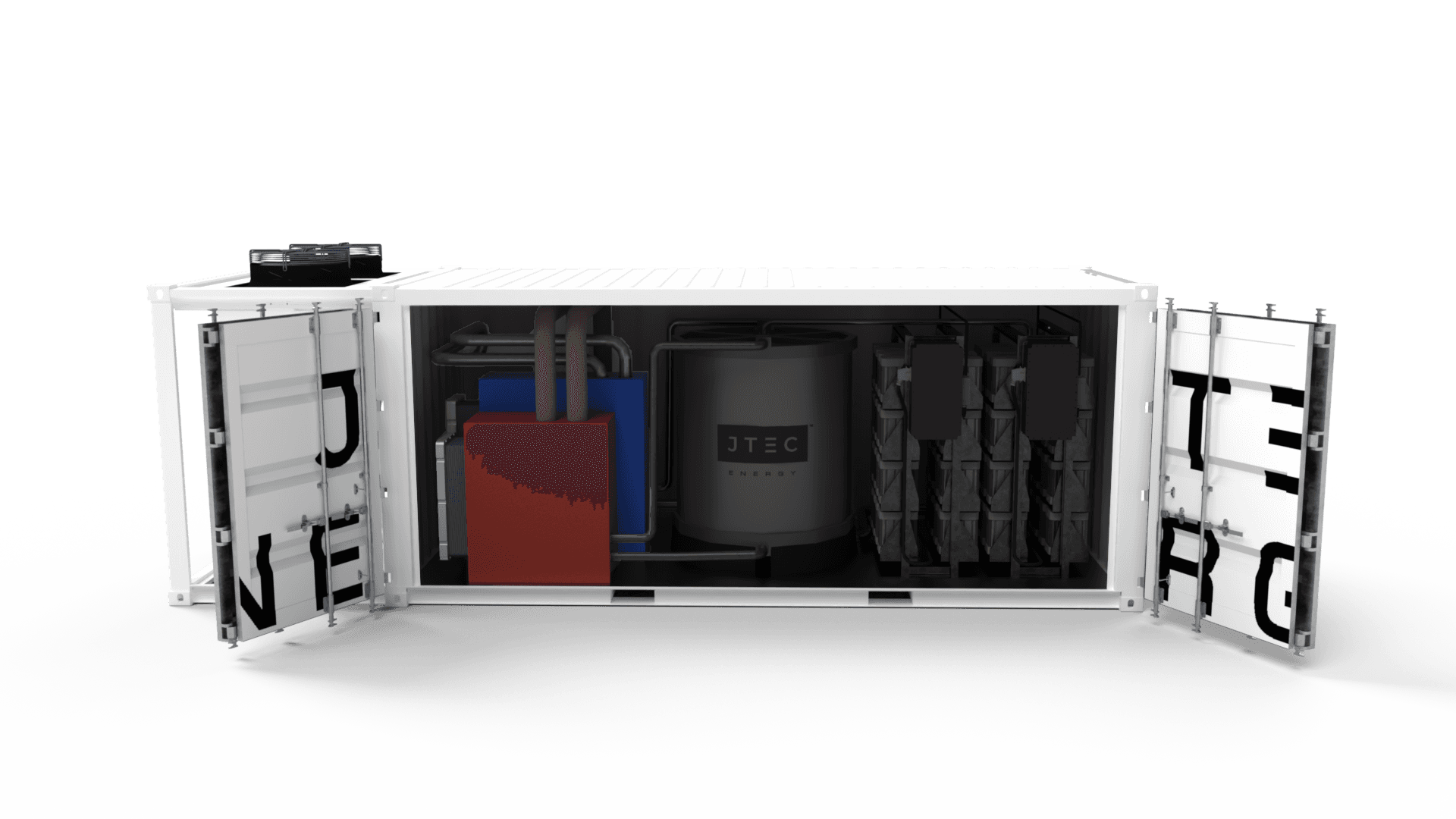
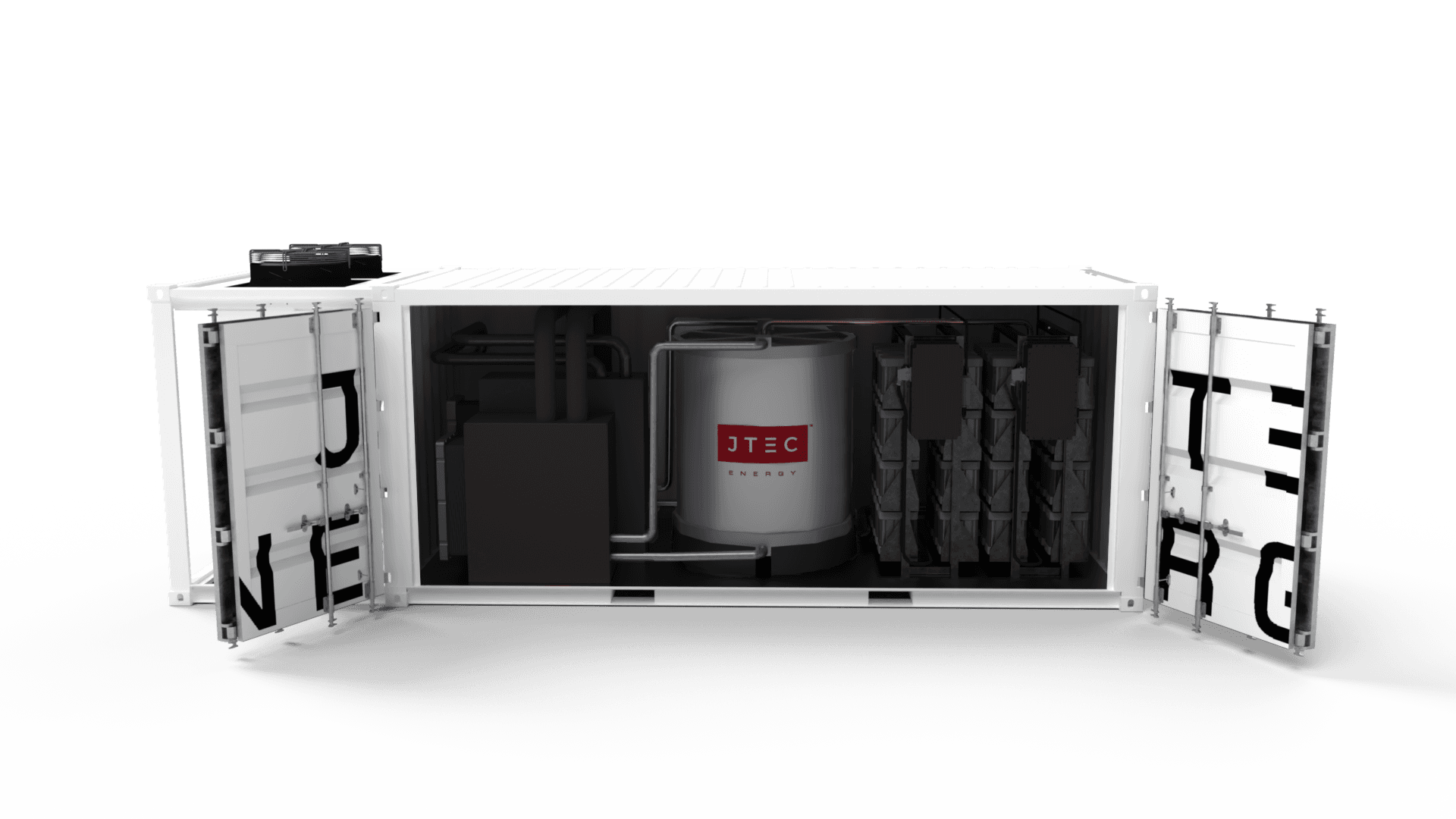
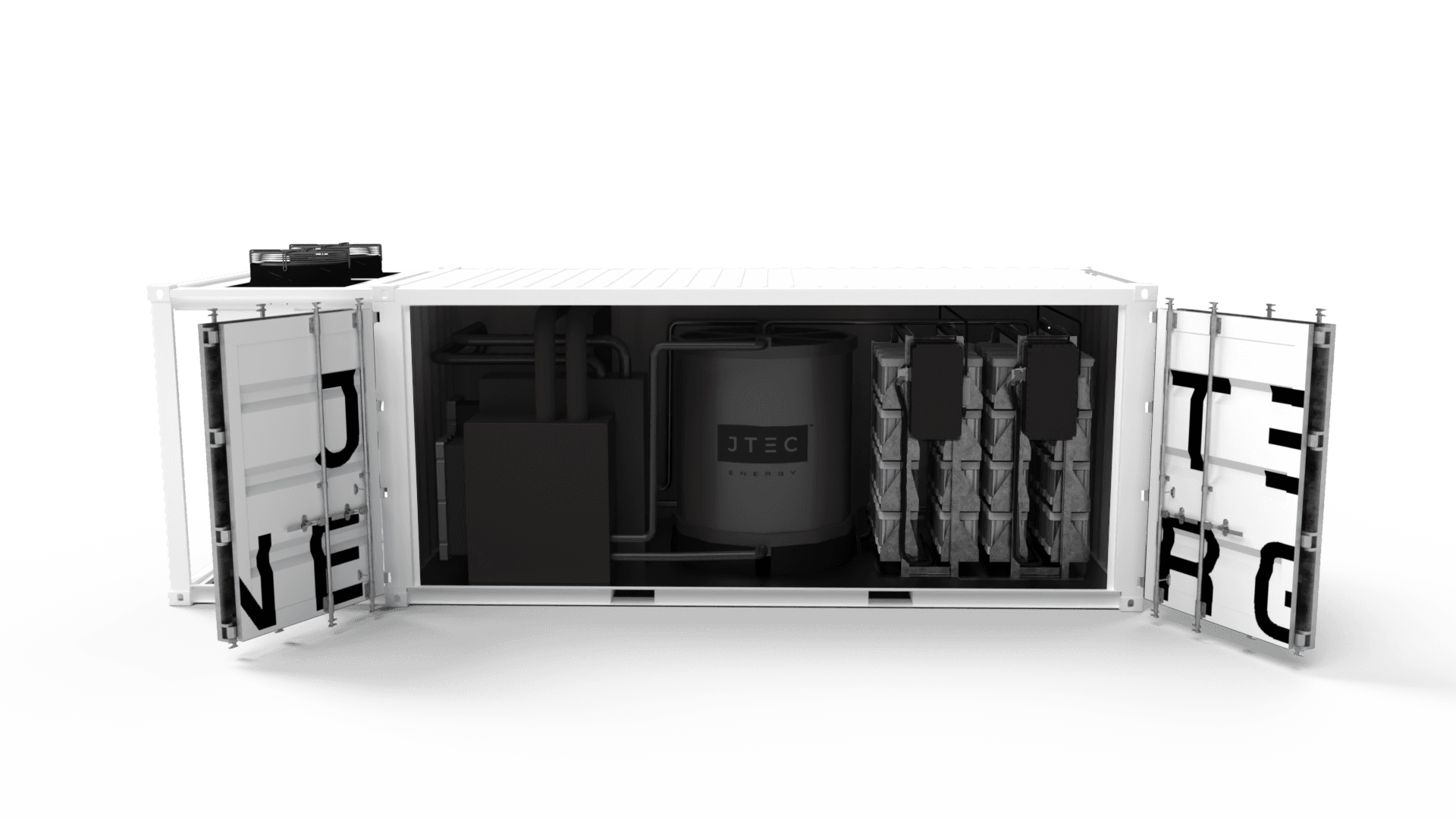
The JTEC cycle utilizes a four-stage approach to convert waste heat into usable electricity.
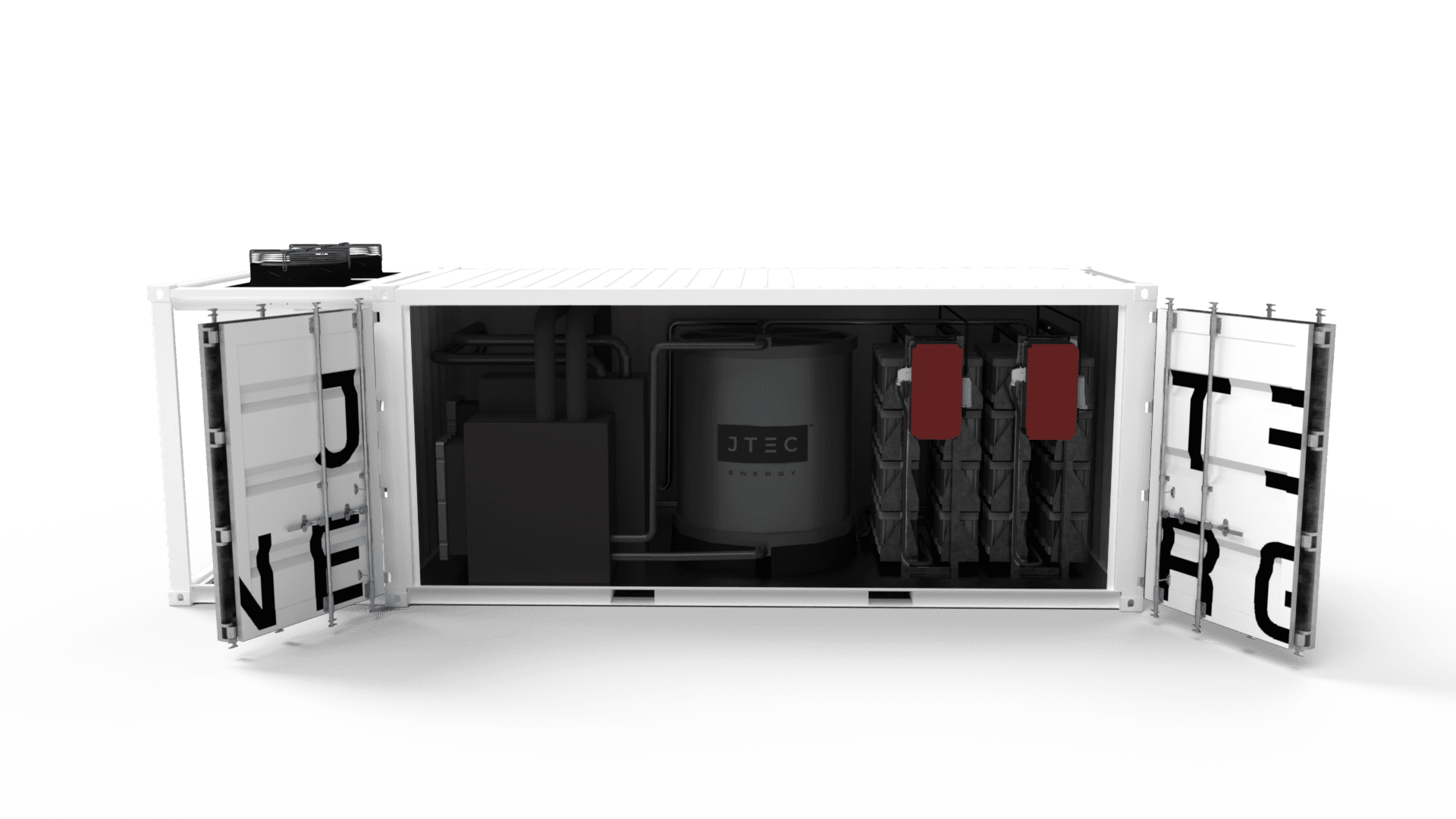
Heat Input
JTEC's heat exchanger module accepts waste heat from virtually any source — geothermal reservoirs, data center exhaust, industrial processes, or power plant effluent — beginning at temperatures as low as 100°C. No combustion. Pure thermal input.
H₂ Compression
The JTEC reactor module compresses hydrogen using phase change materials that absorb and release gaseous hydrogen. No rotating turbomachinery — a highly efficient, reliable compressor driven entirely by waste heat.
H₂ Expansion
The stack module uses membrane electrode assemblies to expand compressed hydrogen. Work is extracted directly from the pressure differential — a highly customizable power delivery mechanism with no moving parts.
Power Conversion
The power conversion module boosts and converts the DC output to match any installation site's requirements — 60V DC, 800V DC, 480 3PH AC, and MVDC. Grid-ready power at any scale.
Learn more
Our founder explains what we do